


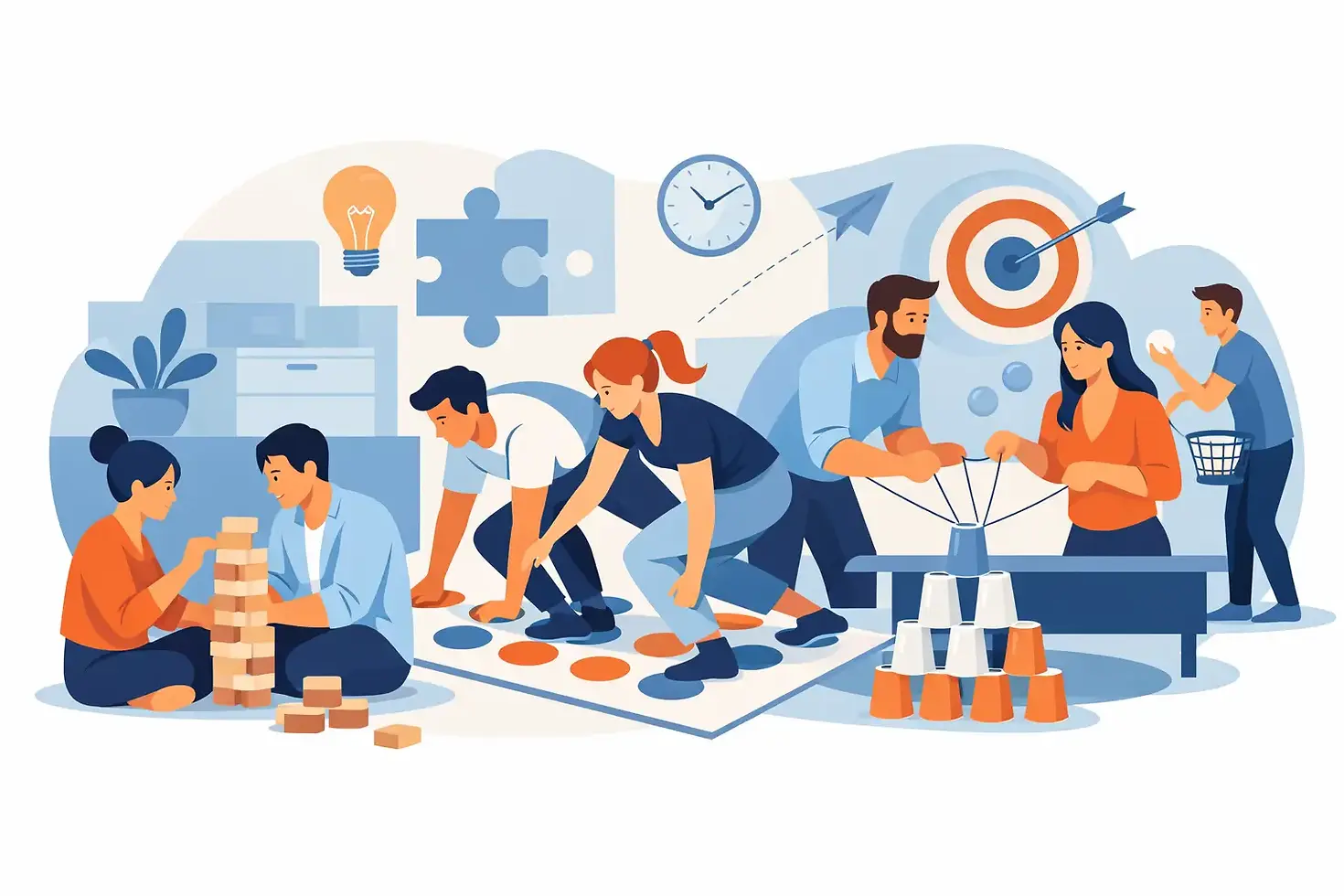
12 Indoor Team Building Games That Work

Rainy day. Office slump. Mixed-age group. Tight schedule. These are exactly the moments when indoor team building games make the biggest difference. The right game can shift a room from polite small talk to real collaboration in minutes, without requiring perfect weather, a huge budget, or athletic ability.
That is why indoor team activities keep showing up in corporate events, school programs, family gatherings, and private group celebrations. They are flexible, easy to adapt, and much better than forcing people into awkward icebreakers that feel like work. When the room is right and the game is well chosen, people relax, compete a little, laugh a lot, and start working together naturally.
Why indoor team building games work so well
Indoor formats have one major advantage - control. You are not dealing with heat, wind, transportation issues, or last-minute weather changes. That matters more than people think, especially when you are organizing a group with different ages, personalities, and comfort levels.
They also create a more focused environment. In a contained space, people pay attention, move together, and stay engaged longer. That is useful for companies trying to improve communication, but it is just as valuable for birthday groups, school outings, or friend groups who want something more interactive than sitting around a table.
The best part is variety. Indoor games can be fast and funny, active and competitive, or strategic and problem-solving driven. Some groups want high energy from the start. Others need a gentler warm-up before they are ready to compete. It depends on the group dynamic, the size of the team, and whether the goal is bonding, morale, or pure fun.
12 indoor team building games worth trying
1. Scavenger hunt relay
This works especially well in a large indoor venue with multiple zones. Teams race to find objects, solve clues, or complete mini-challenges before moving to the next checkpoint. It builds communication quickly because no one wins by working solo.
The trade-off is setup time. A good scavenger hunt needs structure, clear rules, and a layout that is exciting but not confusing. When done well, though, it brings out strategy, speed, and plenty of laughs.
2. Trivia battle
Trivia is a smart choice for mixed groups because it gives everyone a way in. One person knows pop culture, another knows sports, another is great at logic or general knowledge. That shared contribution is the whole point of team building.
It is less physical than other games, so it is ideal when you want something accessible and low-pressure. To keep it lively, use timed rounds and varied categories instead of making it feel like a classroom quiz.
3. Escape room challenge
If your goal is communication under pressure, this one delivers. Teams have to solve clues, divide tasks, and think clearly while the clock is ticking. You learn very quickly who takes initiative, who spots details, and who keeps the group calm.
Not every group loves pressure-based games, though. Some people thrive on urgency, while others need more breathing room. That is why escape formats work best when the atmosphere stays fun rather than overly intense.
4. Laser tag team mission
Few indoor team building games generate instant energy like laser tag. The moment teams get a shared mission, people start planning, protecting each other, and adjusting tactics on the fly. It is active, social, and easy to get excited about.
This is a strong option for teams that want movement and competition rather than sitting-based activities. It also works well for corporate groups because it feels fresh, not forced. A venue like Fun Arena can make this kind of format especially effective by combining space, game flow, and event support in one place.
5. Build challenge
Give teams bricks, simple materials, or themed props and ask them to build something under time pressure. Maybe it is the tallest structure, the strongest bridge, or the most creative design based on a prompt. This kind of challenge rewards planning and creativity at the same time.
It is a great equalizer because it does not rely on fitness or specialist knowledge. People who are quieter in other settings often get very involved here, especially when the challenge is visual and hands-on.
6. Human bingo
For groups that do not know each other well yet, human bingo is an easy opener. Each person has a card with prompts like has traveled to three countries, plays a musical instrument, or loves spicy food. The goal is to talk to others and fill the card.
It is simple, but that is exactly why it works. It lowers social friction and gets people moving around the room. If you need a first activity before bigger team games, this is a safe bet.
7. Minute-to-win-it stations
Short, silly challenges can be surprisingly effective. Stack cups, balance objects, transfer items without using hands, or complete dexterity tasks against the clock. Teams rotate through stations and collect points.
This style keeps the pace high and avoids the problem of one long game losing momentum. It is especially useful for family groups or large parties where attention spans vary.
Tech-led team games add a different layer of excitement because they blend movement, strategy, and spectacle. Augmented esports formats can turn a standard group outing into something that feels much bigger and more memorable.
These are ideal for teens, young adults, and corporate groups looking for something beyond the usual workshop feel. The key is balance - enough competition to make it thrilling, but enough guidance to keep it inclusive for first-timers.
9. Blindfold obstacle course
This game is all about trust. One teammate gives instructions while another navigates the course without seeing. It sounds simple, but it quickly highlights the value of clarity, listening, and patience.
It can be funny and revealing in the best way. Still, it needs a safe setup and a supportive tone. If the group is very new or hesitant, start with something lighter before introducing trust-based challenges.
10. Puzzle race
Teams get a set of puzzles, riddles, or logic tasks and compete to finish first. This works well indoors because it is easy to run in a controlled space and can be adjusted for different age groups or skill levels.
The strongest version mixes mental challenges with small physical tasks so the energy stays up. Too many static puzzles can slow the room down.
11. Team charades with a twist
Classic charades still works, especially when the prompts are customized to the group or event theme. Add categories like workplace habits, movies, sports, or childhood favorites, and suddenly everyone is invested.
This is one of the best low-cost options because it creates energy fast with almost no setup. It also helps quieter groups loosen up without feeling singled out.
12. Mission-based game zones
Sometimes the best format is not one single game but a sequence of challenges across different activity areas. Teams earn points in each zone, then combine scores for a final result. This creates variety and keeps different personality types engaged.
That matters because no single activity suits everyone. One person loves strategy, another wants speed, another just wants to move. A multi-activity setup gives each team more chances to click.
How to choose the right indoor team building games
The best choice depends on what kind of result you want. If your team needs to break the ice, start simple and social. If your group already knows each other and wants excitement, go for competitive formats with movement. If the event needs to include kids, teens, and adults together, choose games with flexible participation instead of niche skill requirements.
Group size matters too. Small teams usually do better with puzzle games, trust challenges, and escape-style formats. Larger groups often need rotation-based stations, scavenger hunts, or mission-based activities to avoid long wait times.
Venue also changes everything. A big indoor entertainment space opens the door to active, high-energy experiences that would be hard to recreate in a meeting room or home setting. That is often the difference between a team event people politely attend and one they actually talk about afterward.
What makes a team game actually successful
The game itself is only part of it. Good indoor team building games have clear instructions, fast starts, and enough structure to keep things moving. If people spend too long waiting, listening, or figuring out what is happening, the energy drops fast.
It also helps when the activity feels genuinely fun first and purposeful second. Most groups do not want a session that feels like a lecture dressed up as entertainment. They want real play, real interaction, and a reason to cheer each other on.
That is why variety wins. A great team event usually mixes movement, laughter, strategy, and moments of surprise. It gives competitive people a chance to push, while still making space for everyone else to contribute.
If you are planning an event, think less about finding the most impressive-sounding activity and more about finding the right fit for your group. The best indoor team building games are the ones people can join quickly, enjoy fully, and remember long after the score is forgotten.


Comments