


Can Toddlers Play Laser Tag? What Parents Should Know

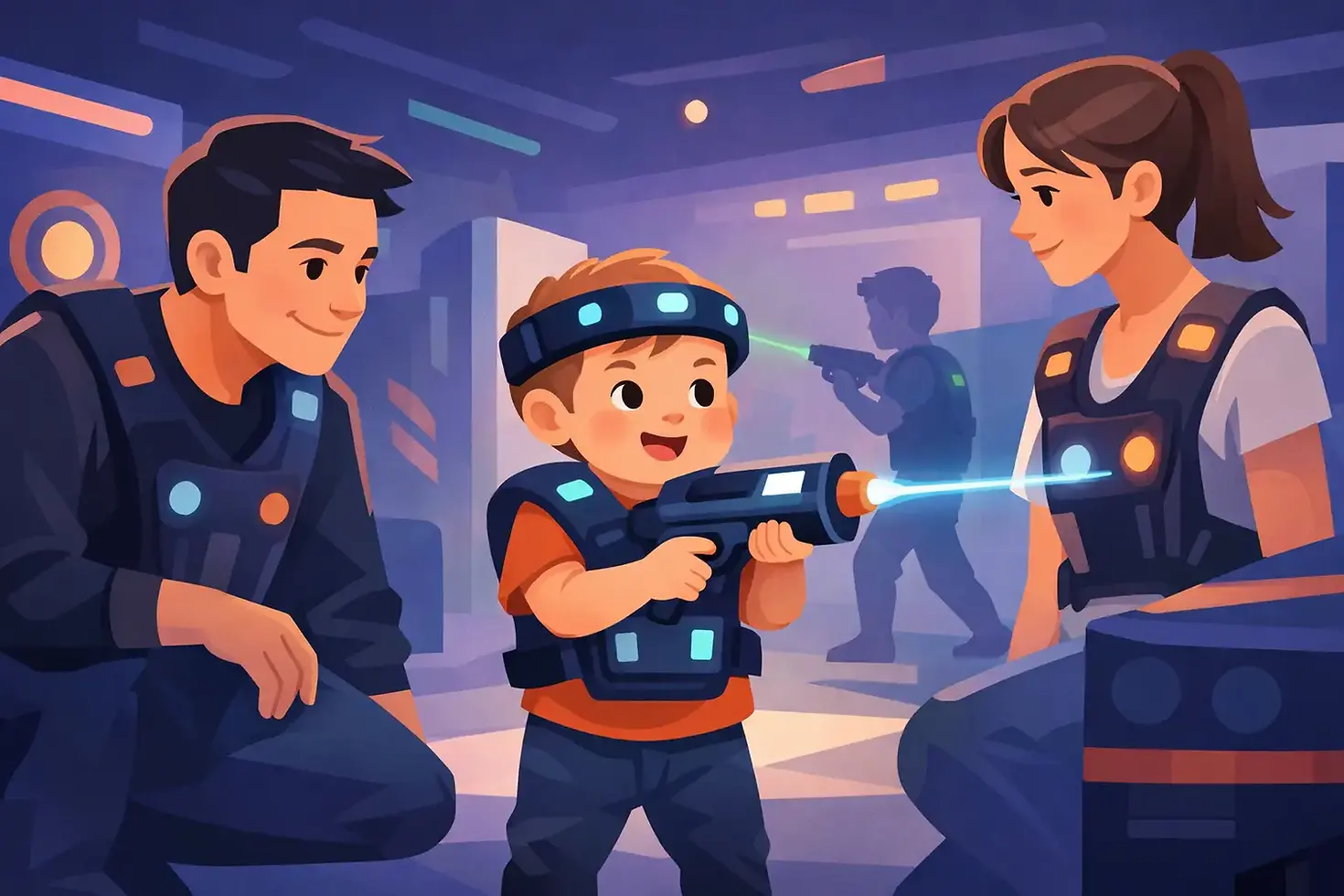
The vest looks exciting, the arena lights are glowing, and your little one wants to join the bigger kids. So, can toddlers play laser tag? Usually, it depends less on a toddler's enthusiasm and more on the venue's age rules, equipment fit, confidence level, and ability to follow basic game instructions.
Laser tag is designed as active group play, often with darkened rooms, sound effects, obstacles, and plenty of movement. For many toddlers, that can feel more overwhelming than fun. The good news is that a family outing does not have to stop there. With the right activity mix, younger children can still have a brilliant play day while older siblings race into the arena.
Can Toddlers Play Laser Tag Safely?
There is no single age that works for every child or every laser tag arena. Many venues set a minimum age, minimum height, or both. These rules are not there to take the fun away. They help make sure players can wear the equipment comfortably, understand the game, and move safely around the arena.
A typical laser tag vest can be bulky for a toddler, while the blaster may be difficult for small hands to hold and use. The arena itself may also include low lighting, music, fog effects, ramps, corners, and fast-moving players. A child who is perfectly happy in a bright play area might decide that a laser tag mission is a little too intense once the door closes.
Parents should also consider the group. A calm session with family members is very different from a busy game packed with energetic older children or teens. Even when a venue allows younger players, a toddler may enjoy the experience most when they can enter with a parent, stay close to familiar people, and leave whenever they need a break.
The Real Question: Is Your Child Ready?
Age is a helpful starting point, but readiness matters just as much. Some preschoolers are confident with new environments and can follow a few simple rules. Other children may need more time before they are ready for the noise, darkness, and excitement of a game arena.
Before booking, think about whether your child can wear a vest for several minutes without becoming upset, carry lightweight equipment, and understand instructions such as walking instead of running, staying with the group, and not climbing on obstacles. It also helps if they are comfortable in dim rooms and do not become distressed by sudden sounds or flashing lights.
A toddler who says they want to play may simply be drawn to the bright colors and the idea of joining older siblings. That is completely normal. Try explaining what laser tag looks and sounds like before the visit. Let them know it can be dark, that people may move quickly, and that taking a break is always okay.
Laser Tag Safety Tips for Young Children
If your venue permits a younger child to participate, a little preparation makes the session more enjoyable for everyone. Choose a quieter time when possible, such as an early session or a family-focused booking. A smaller group gives parents more room to guide a young child and reduces the chance of them feeling lost in the action.
Comfortable closed-toe shoes are a must. Avoid loose clothing that could catch while moving around obstacles, and make sure your child has used the restroom before the game begins. A quick snack and water beforehand can also prevent a tired or hungry toddler from reaching their limit halfway through the fun.
Talk through the rules in simple language. Instead of giving a long explanation, try: “Stay with me, walk inside, and if it feels too loud, we can go out.” That is enough for most young children. Keep expectations low, too. They do not need to score points or finish every round. Their win might be putting on the vest, exploring the entrance area, or making it through a few minutes with a big smile.
Parents should always follow the staff's guidance. Team members know the layout, game setup, and participation requirements, and they can help you decide whether a session is a good fit. If a child is frightened, uncomfortable, or unable to follow the rules, stepping out is the right call. There will be plenty of other chances to play.
Better Alternatives for Toddlers at a Family Fun Center
For many toddlers, laser tag is something to look forward to rather than something to force early. The best family entertainment centers offer enough variety that every age group has a place to play.
A LEGO-based play space is often a great choice for younger children. It gives them room to build, imagine, sort, create, and play at their own speed. Unlike a timed game, there is no pressure to keep up with a team or understand a scoring system. It is hands-on, social, and easy to enjoy alongside a parent or sibling.
A playground-style area can be another strong option, especially for toddlers who need to climb, crawl, slide, and burn energy. Look for age-appropriate spaces where little ones can move freely without competing with much larger players. These areas can also make a big difference during family visits, giving adults a simple plan when older children choose activities with higher age limits.
Some technology-led attractions may be suitable for children when they are a little older, but not every experience is made for toddlers. Virtual reality, for example, may involve headsets, intense visuals, or age requirements. HADO and other active games can be fantastic for school-age kids, teens, and adults, yet young children often have more fun with something simpler and more familiar.
That is where a multi-activity venue shines. One child can enjoy laser tag, another can try an active game, and the youngest can stay busy in a play-focused space. Nobody has to sit on the sidelines for the whole visit.
Planning a Birthday With Toddlers and Older Kids
Mixed-age birthday parties are common, especially when siblings, cousins, and family friends are invited. The trick is not to make every activity fit every guest. Build the celebration around a main event for the birthday child, then make sure younger visitors have a fun alternative close by.
For an older child's laser tag party, toddlers may be happiest with a parent in a dedicated play area while the main group heads into the arena. After the game, everyone can come back together for food, cake, photos, and presents. It keeps the party exciting for bigger kids without putting pressure on little ones to manage an activity that is not quite right for them yet.
When booking, share the ages of the guests with the venue team. They can help shape a schedule that feels organized rather than rushed, especially when you are coordinating several families. At Fun Arena, the variety of activities under one roof makes it easier to create a celebration where different ages can have their own kind of fun.
Questions to Ask Before You Book
A quick conversation with the venue can save a lot of guesswork. Ask about the minimum age and height for laser tag, whether an adult can enter with a younger child, and whether the game format can be adjusted for a family group. It is also useful to ask about lighting, sound levels, session length, and the closest quiet area if your child needs a break.
If your toddler is close to the minimum age, consider visiting first for another activity. They can see the venue, hear some of the background excitement, and become comfortable with the environment without the pressure of joining a game. That first visit can tell you far more than an age number ever will.
The best time for laser tag is when your child is curious, comfortable, and ready to enjoy the action on their terms. Until then, let them build, climb, play, and cheer from the sidelines. Their first mission will be even more exciting when they are truly ready for it.


Comments